








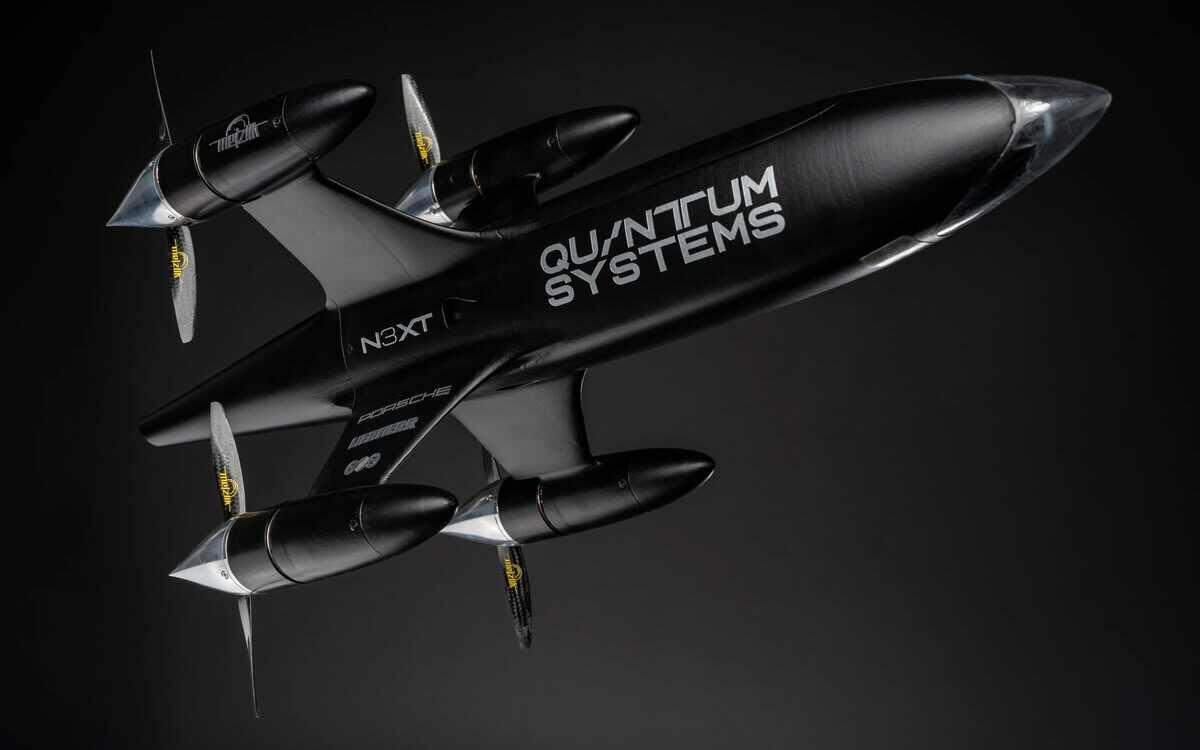
A German-designed electrically powered drone has set the limit for battery powered flight, after apparently hitting an incredible 699 km/h or 434 mph in a high speed test. The craft, named Apex Recordhunter, was produced by Quantum Systems as a technology demonstrator to the high speed unmanned systems of the future, which may see it become the world’s fastest officially certified electric-powered aircraft.
There is though one significant caveat underlying that headline. The 699 km/h figure is not an officially ratified world record.
As Quantum Systems the speed was attained during in-house trials, and it is not yet verified by an independent testing body. The historic flight occurred 26 June 2026 when Quantum Systems N3XT team conducted the test of the Apex RecordhunterDrone in Germany. The really interesting fact is that the speed was reached in the horizontal flight and not in the dive flight.
If not it could be a big difference on a plane’s real speed because of high-velocity decent. And at 699 km/h, it would be faster than the current bona fide world record of 657.59 km/h. A difference of over 41 km/h does not seem such a lot when one compares this with the speed altogether, though given how fast electric flight currently is, every km/h takes huge developments in aerodynamics propulsion power delivery and thermal management.
The project was built over a period of about a year, and was not designed to be a standard machine for the masses. Quantum Systems made the Apex Recordhunter a platform for technology to look at how far you could push the envelope with modern battery-electric powered systems. These brought lessons can be applied to high speed interceptor UAVs etc.
in the future. A significant aspect of the project was related to battery technology. Based on reports, high performance battery specialists V4Smart, a battery technology arm of the Porsche Group, supplied support to the project. Up to 700 km/hr an electric aircraft has to draw a huge amount of energy and the weight of the aircraft has to be kept at a minimum, which makes battery management one of the most daunting tasks for the engineering team.
The speed of the Recordhunter also emphasizes the immense progress electric flying has made in recent times. Electric aircraft are commonly thought to have quite low velocities and endurance capacities since batteries have less energy per kilogram than traditional aviation fuel. Still the Recordhunter shows that electric drives can perform very well when built for highly specific, short-duration, high-power flight.
Speed is of course only one side of the coin. The Apex Recordhunter is a technology demonstrator, i.e. a craft that is built to test the limits of performance rather than operate as a high-range commercial plane. While the Recordhunter is capable of producing 699 km/h, it doesn’t necessarily follow that the craft can hold that speed during long duration flight. Battery-electric aircraft constantly need to tradeoff between power weight heat and endurance.


