








The global music industry is witnessing a powerful cultural shift as K-pop continues to expand deeper into Western markets, transforming from a niche genre into a dominant force across the United States, Europe, and beyond. What once relied heavily on regional popularity has now evolved into a global phenomenon driven by massive fan engagement, record-breaking tours, and unprecedented digital reach.
At the center of this expansion is BTS, whose 2026 comeback has become one of the most defining moments for K-pop’s global rise. Their latest album achieved massive international success, topping charts across the United Kingdom, Germany, Australia, and multiple other Western markets. This level of dominance in traditionally Western-controlled charts highlights how K-pop is no longer competing on the sidelines but actively shaping global music trends.
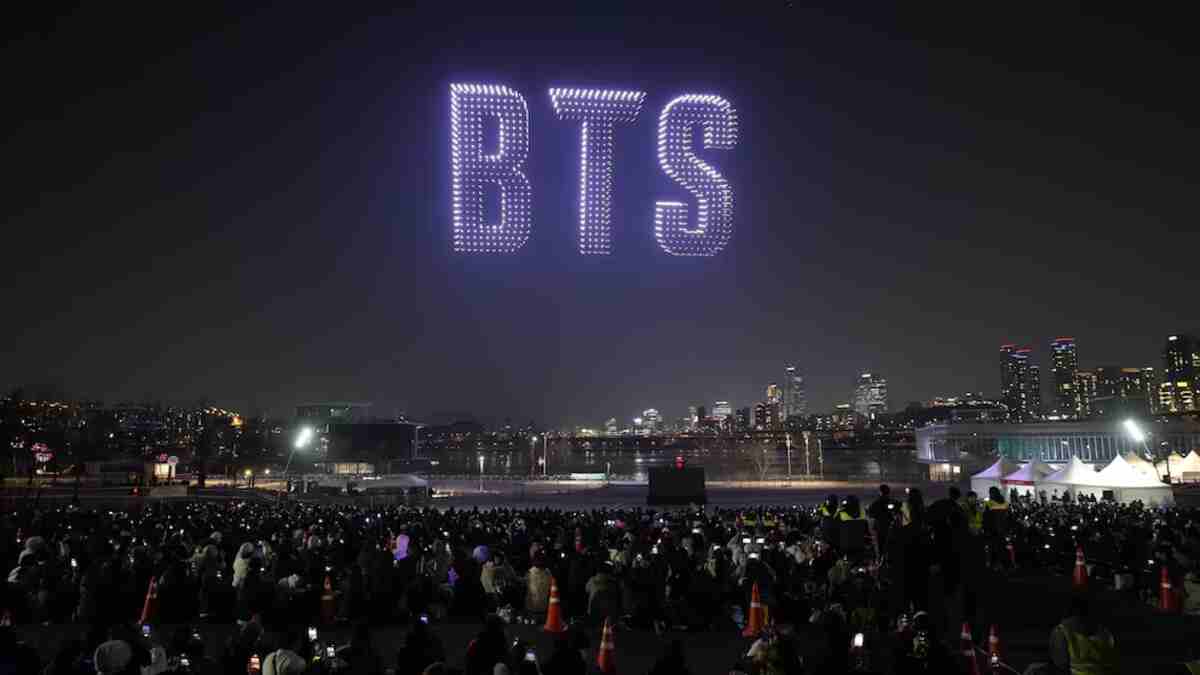
One of the most significant indicators of this shift is the scale of global touring. BTS has launched a massive world tour covering over 30 cities across North America, Europe, and other regions, with concerts selling out within minutes. The demand is so intense that it mirrors, and in some cases rivals, the largest Western artists, signaling that K-pop acts are now operating at the same commercial level as global superstars.
Beyond ticket sales, the economic impact of K-pop’s expansion is becoming increasingly visible. The BTS fanbase, known as ARMY, is estimated to generate billions of dollars in spending across cities hosting concerts, including travel, hotels, merchandise, and local experiences. This phenomenon has turned K-pop tours into major economic events, comparable to global pop tours by artists like Taylor Swift or Coldplay.
Another major driver of K-pop’s Western success is its digital-first strategy. BTS’s comeback concert was streamed globally on Netflix and attracted over 18 million viewers, ranking in the platform’s top charts across dozens of countries. This approach allows K-pop artists to bypass traditional geographic limitations and reach audiences instantly, making their content accessible worldwide regardless of language barriers.
Language itself, once considered a limitation, has now become part of K-pop’s identity and appeal. Instead of fully adapting to Western norms, many K-pop artists continue to perform primarily in Korean while blending global musical influences such as hip-hop, pop, and electronic music. This hybrid style has proven highly successful, resonating with international audiences who value authenticity and cultural uniqueness.
The influence of K-pop is also expanding beyond music into broader entertainment and culture. Western television shows, award ceremonies, and media platforms are increasingly featuring K-pop artists, while collaborations between Korean and Western musicians are becoming more common. This integration is helping normalize K-pop within mainstream Western entertainment ecosystems.
Social media and fan culture have played a crucial role in this expansion. Platforms like TikTok, YouTube, and Instagram have enabled K-pop fans to actively promote artists, organize global campaigns, and drive streaming numbers. This level of fan participation has created a decentralized promotional system that amplifies K-pop’s reach far beyond traditional marketing channels.
At the same time, Western music industries are adapting to the rise of K-pop. Record labels and production companies are studying the K-pop training system, which focuses on performance, storytelling, and strong visual identity. This influence is already visible in the increasing emphasis on choreography, branding, and fan engagement in Western pop acts.
Despite its success, challenges remain. Cultural differences, market competition, and the pressure to maintain global appeal continue to shape how K-pop evolves. However, the current trajectory suggests that these challenges are being met with innovation rather than limitation.
K-pop’s expansion into Western markets is no longer a trend but a transformation. With record-breaking tours, global streaming dominance, and massive economic impact, the genre is redefining what it means to be a global music powerhouse. As artists continue to break barriers and connect with audiences worldwide, K-pop is not just entering the Western mainstream—it is actively reshaping it.


